I'm a designer and researcher who thinks in systems. With a methods depth in human behavior and multi-stakeholder research and a domain focus in climate and environment, I'm eager to design products & experiences that facilitate social connection and immersive educational experiences.
Selected work
2 projects
01
ProductResearchPrototyping
Street Seat
A modular, collapsible stool designed to reclaim public space for communities historically pushed out of it.
View case study →
02
UX DesignResearch
Fieldr
A mobile-first field tracking app for small hay farming operations in Imperial Valley.
Jalil Cooper Abby Garewal Ingrid Nordberg Nhu Pham
My role
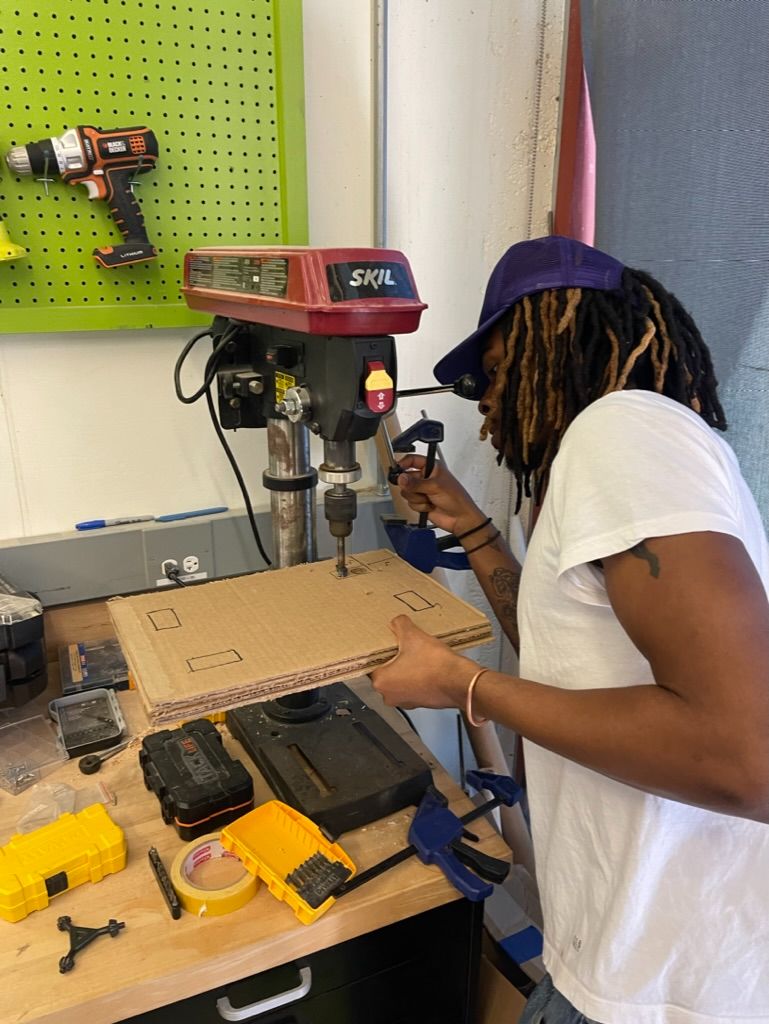
Storyteller Design Researcher Physical Prototyping Materials Research
Timeline
Jan – May 2025
Output
Physical product Brand identity GTM strategy
About the project
Problem statement
Infrastructure is exclusive by design.
Co-DesignPlacemakingPhysical PrototypingMaterials Research
Street Seat is a modular, collapsible stool designed to reclaim public space for the people who have historically been pushed out of it. Built by team Guerillaz, Street Seat responds to what we call the "criminalization of chill", the systemic practice of policing people for simply existing in public space, a reality that disproportionately affects BIPOC, low-income, and unhoused communities in urban areas.
"Why can't we just hang out?"
Through field research in East Palo Alto and Redwood City, interviews with residents, elders, high schoolers, and community organizers, we found that the answer wasn't a lack of desire to gather. It was a lack of infrastructure that makes gathering feel safe, sanctioned, and joyful. Hostile architecture, anti-loitering laws, and over-policing had turned the simple act of sitting outside into something fraught.
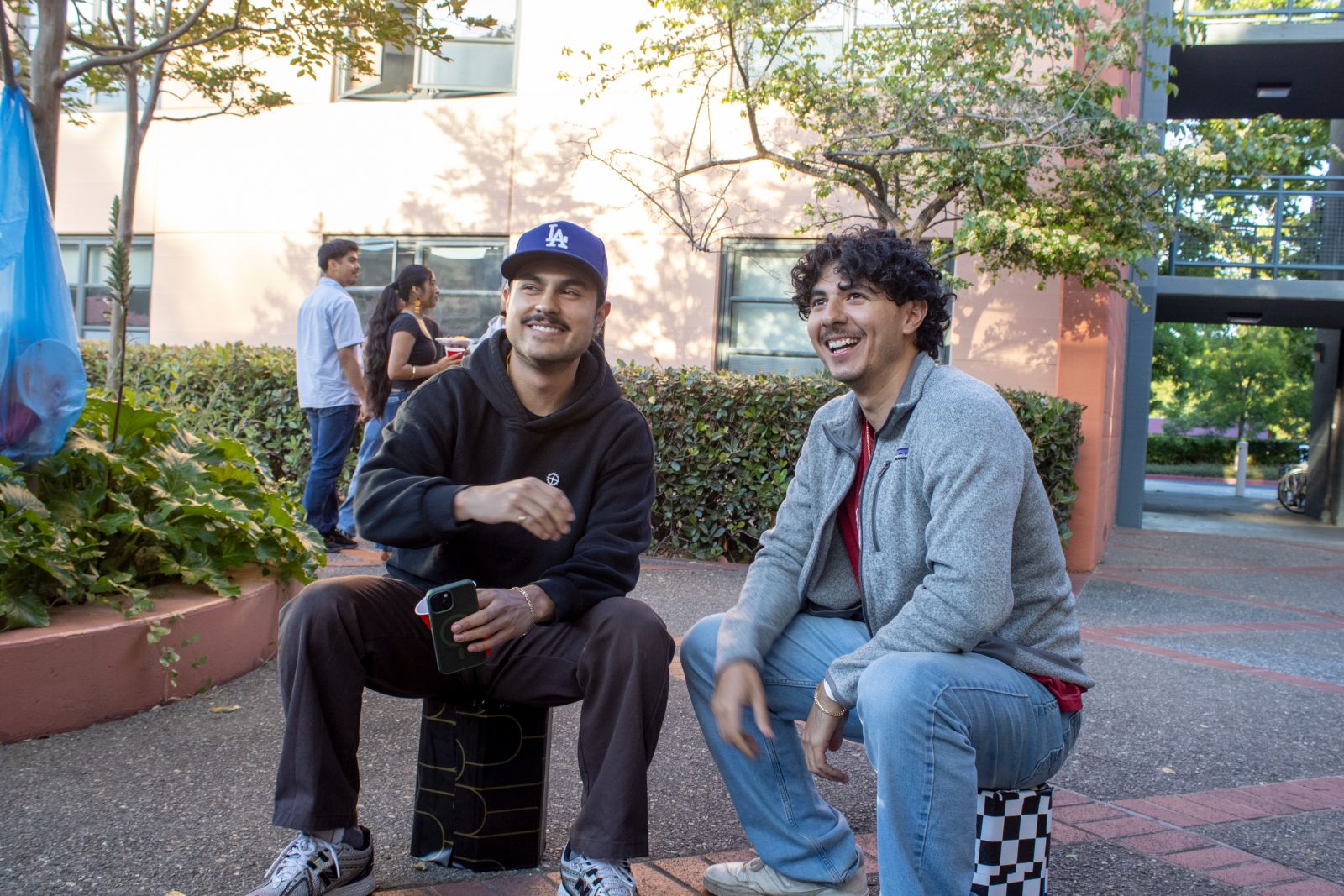
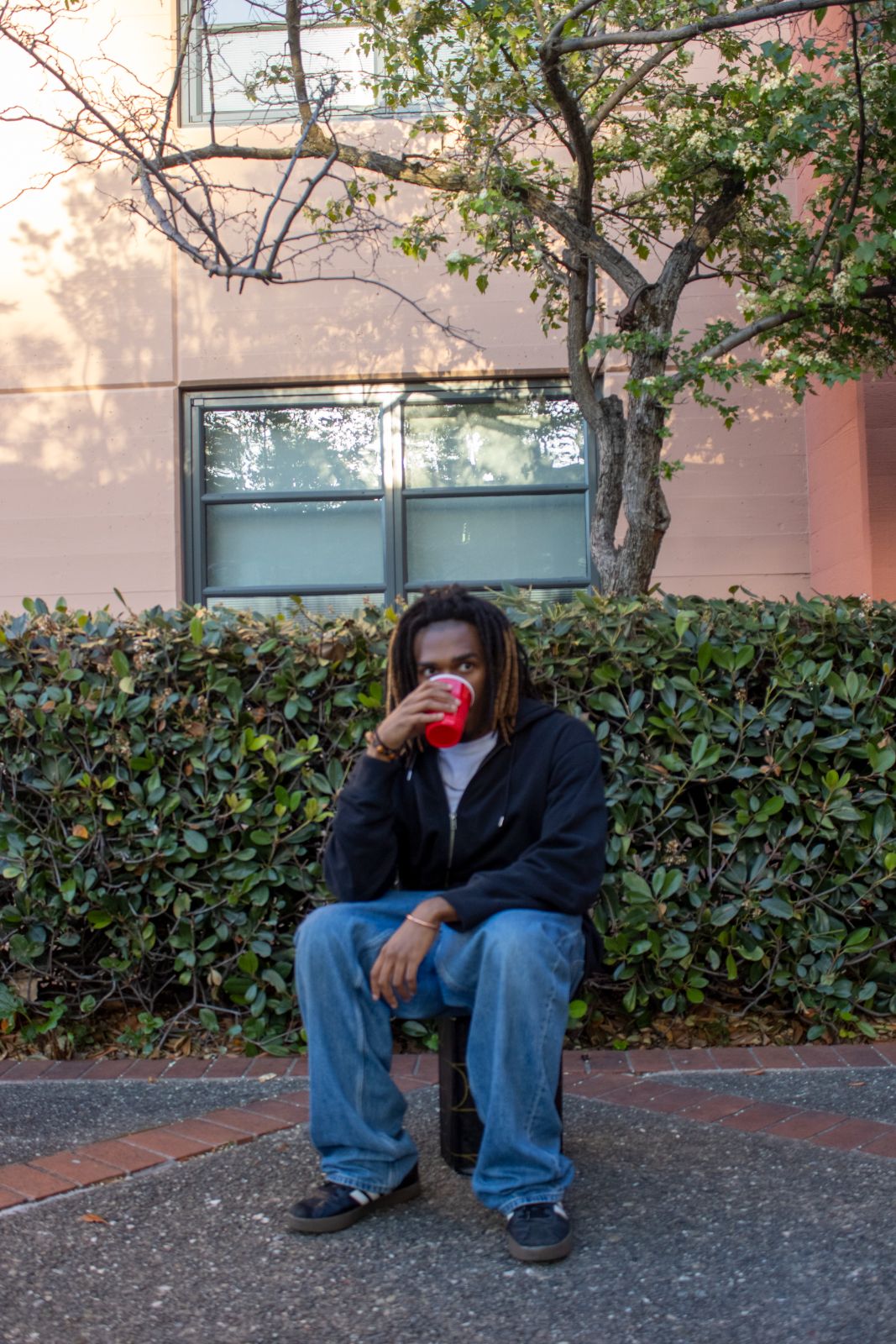
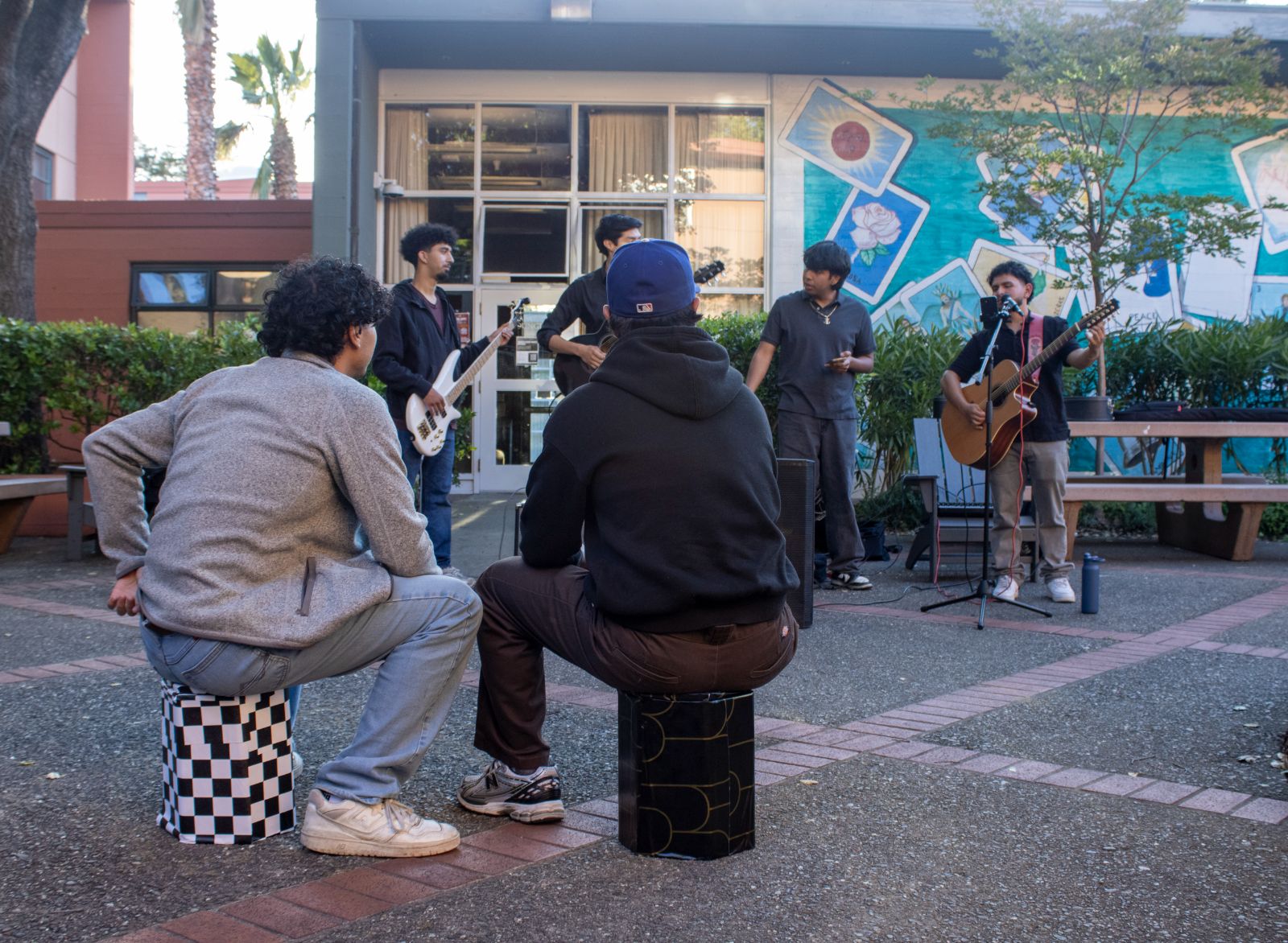
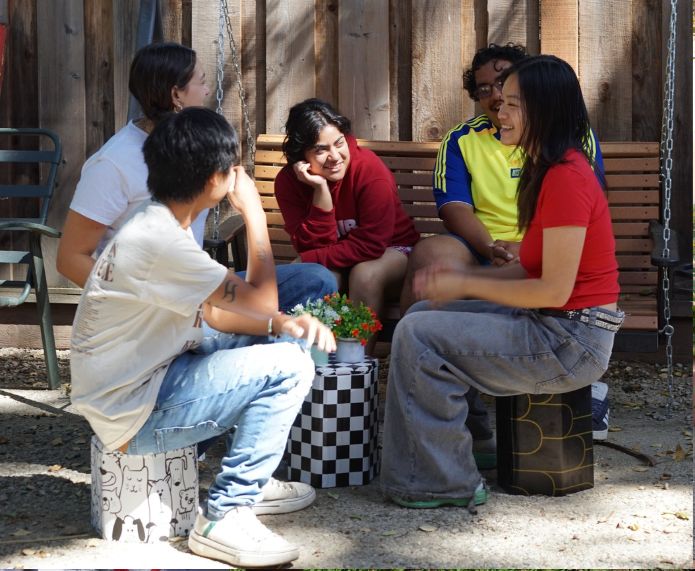
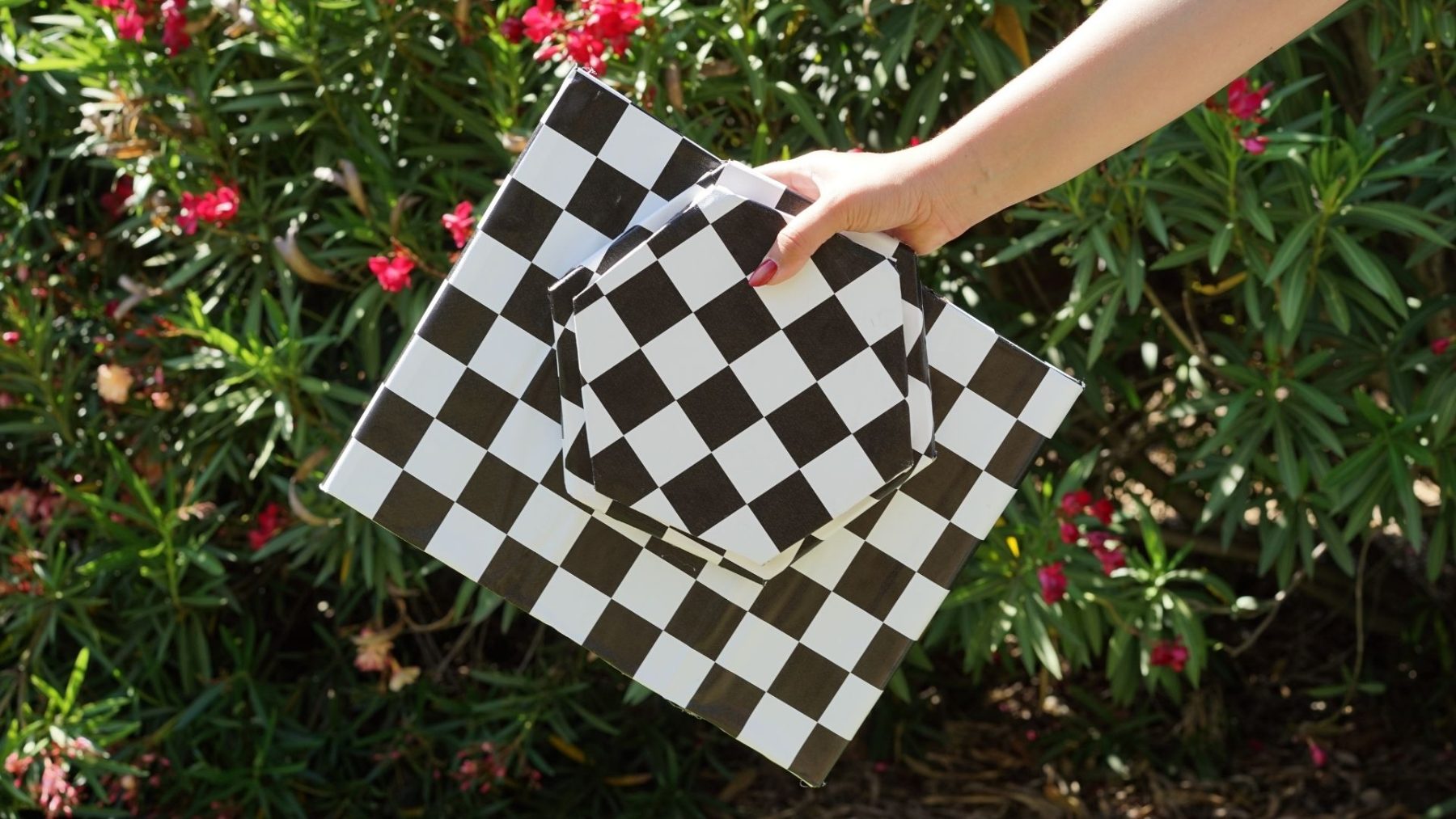
Street Seat is our response. A lightweight cardboard stool that assembles in under 30 seconds, fits flat in a backpack, costs $25, and is designed to be customized by whoever owns it. Minimal intervention. Maximum invitation.
01
User Research
Field research · User journey
Before we drew a line, we spent weeks in East Palo Alto and Redwood City, talking to residents, elders, high schoolers, and community organizers about what gathering really feels like, and what gets in the way.
Kaniyah, 17. East Palo Alto. Student. Needs access to third space and spontaneous social connection.
Field research · Findings & synthesis
Placemaking
, Cultural anchors give communities identity and belonging , Sense of belonging is tied to physical space , Access to resources determines who can participate in public life , Safety is not guaranteed, it is designed in or out
Carceral infrastructure
, Hostile architecture is a deliberate technology of exclusion , Proximity to Black and Latino families correlates with increased police militarization , Surveillance is normalized in over-policed neighborhoods , Anti-homeless design removes rest from public space entirely
Gathering
, People occupy space they don't own as an act of community , Proximity to others brings both joy and a felt sense of safety , Reciprocity, visibility, and care make a space feel alive , Spontaneous gathering is one of the few free acts of resistance
"Everybody was friends with everybody. Once Amazon and Facebook bought up all the property, people were pushed out.", Phyllis, EPA resident
"They're designed so only one person can sit, they do it because they don't want unhoused people setting up at a bus stop.", Jason, South Central LA
"I think it's important that kids know they're important.", Honey, raised 10 kids in EPA
What we heard
Communities don't lack the desire to gather, they lack infrastructure that makes gathering feel safe, sanctioned, and joyful.
What we saw
Existing public seating is designed to exclude. Every hostile bench and anti-loitering law is a design decision that somebody made.
What we concluded
The opportunity isn't to build a better bench. It's to give people the tools to claim space on their own terms.
02
Ideation
How might we...
Four "How might we" questions, each one rooted in something we'd heard or seen in the field.
01
How might we encourage people to reclaim their space and connect with their community?
Communities don't lack the desire to gather, they lack infrastructure that makes gathering feel safe and sanctioned.
02
How might we design something that is easily moveable and portable?
Our users move through space without cars. Any solution requiring installation, permits, or a vehicle is already inaccessible.
03
How might we build safety and bring joy simultaneously?
Safety for our users isn't just physical, it's the feeling of being seen, welcomed, and not at risk of being policed for simply existing.
04
How might we facilitate connection and cultural exchange through the experience?
The seat should be a medium, something that carries stories, invites customization, and reflects the identity of whoever uses it.
These four questions → pointed to one answer
A minimal intervention with maximum invitation.
Small · Modular · Activatable anywhere
03
Prototyping
Physical prototyping & materials research
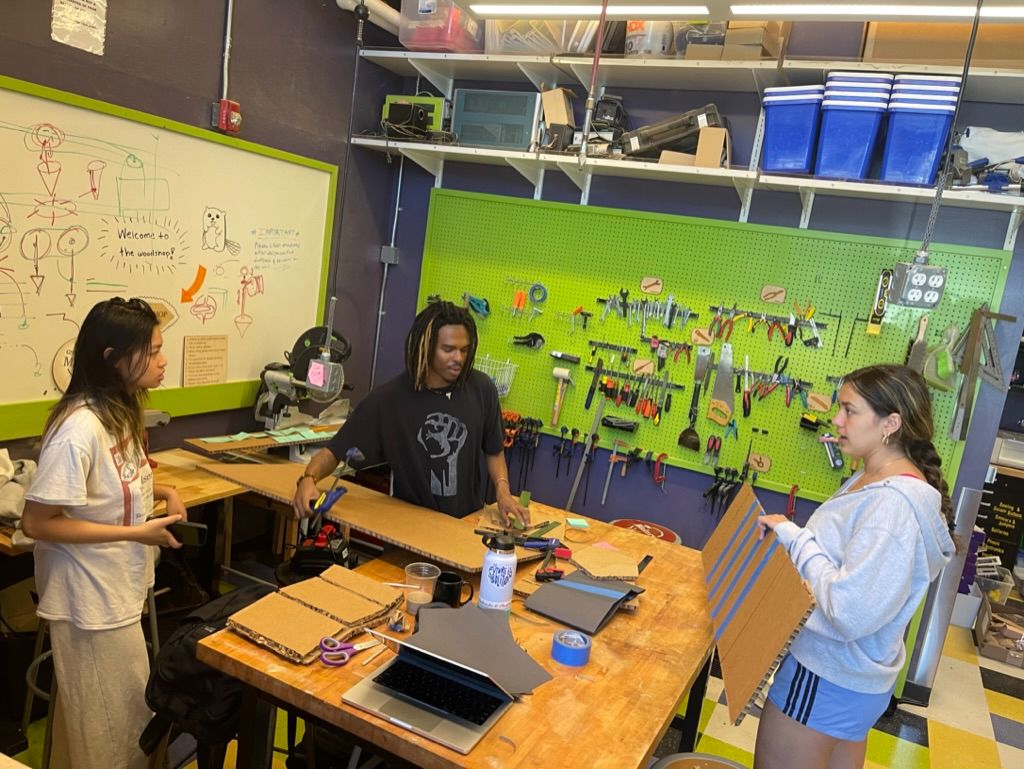
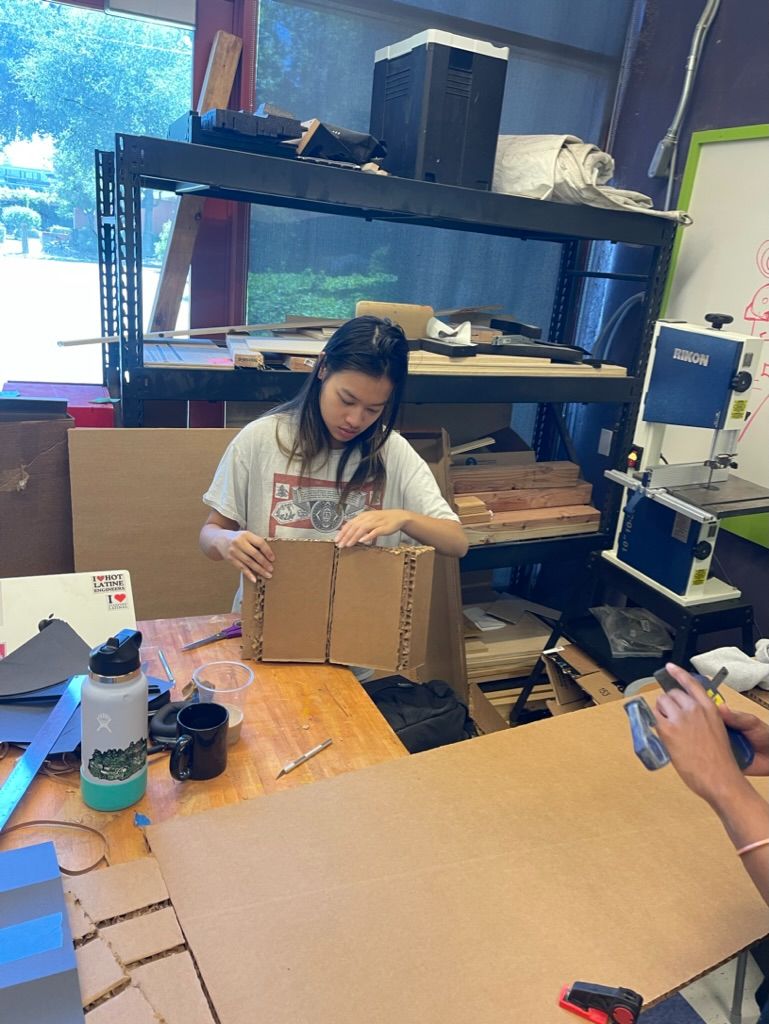
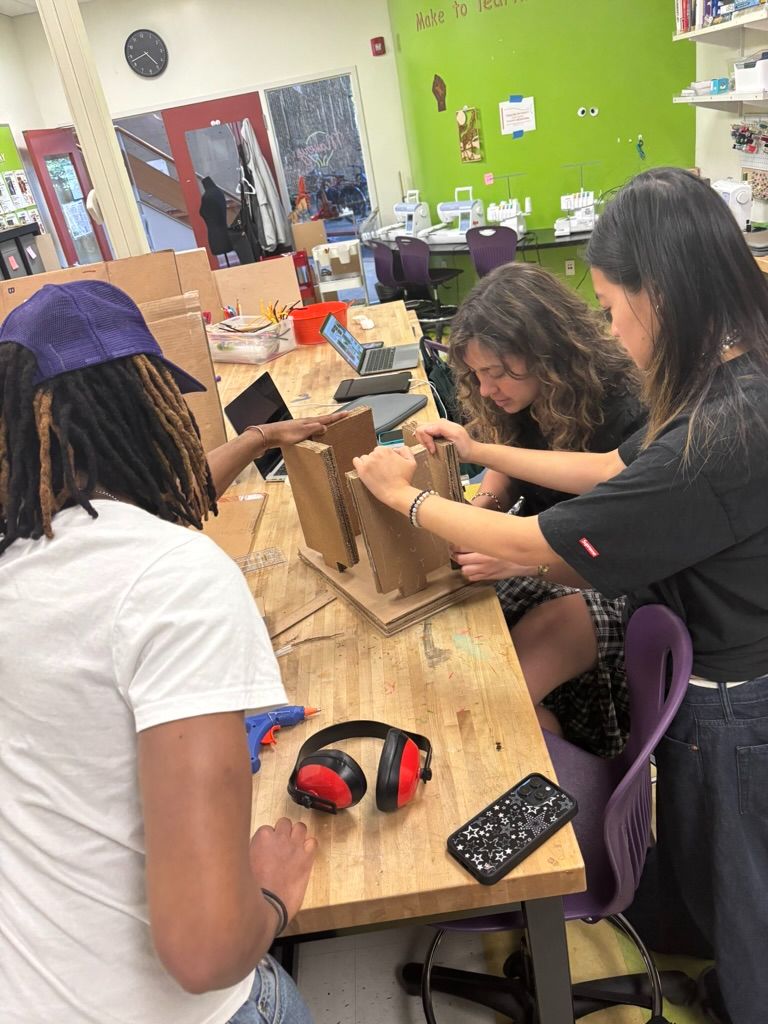
I led the physical prototyping and materials research for Street Seat, testing what could carry a person's weight while staying lightweight, collapsible, and cheap to produce. The constraint was the design.
"Every material decision served three rules."
Cost$10 cost of goods sold
PortabilityFits flat in a standard backpack
Assembly30 seconds, no tools
StrengthHolds adult body weight
IdentityCustomizable surface, ownable
Prototyping evolution
01
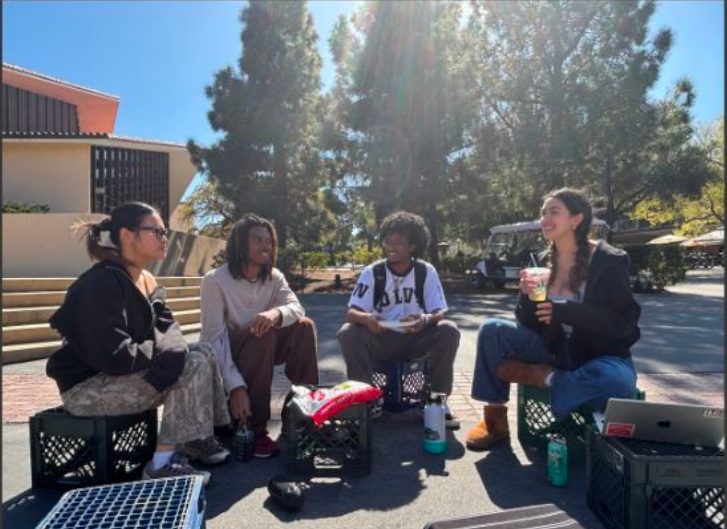
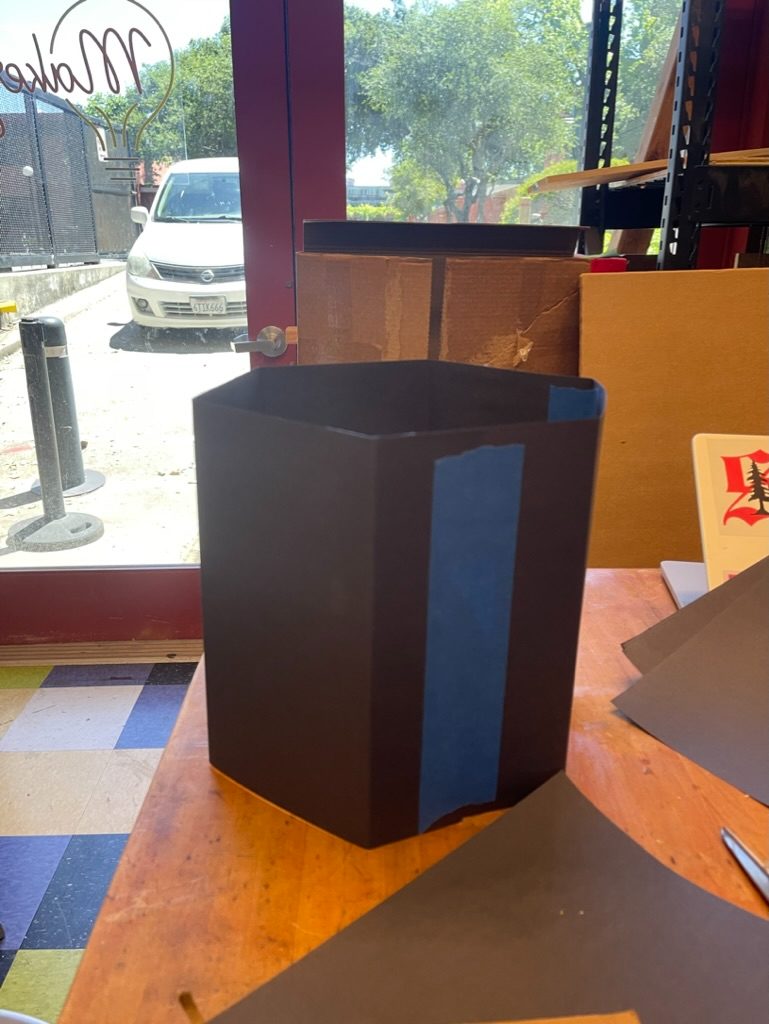
Milk crates
Testing whether the act of sitting creates community. It does! This was the insight that shaped everything.
02
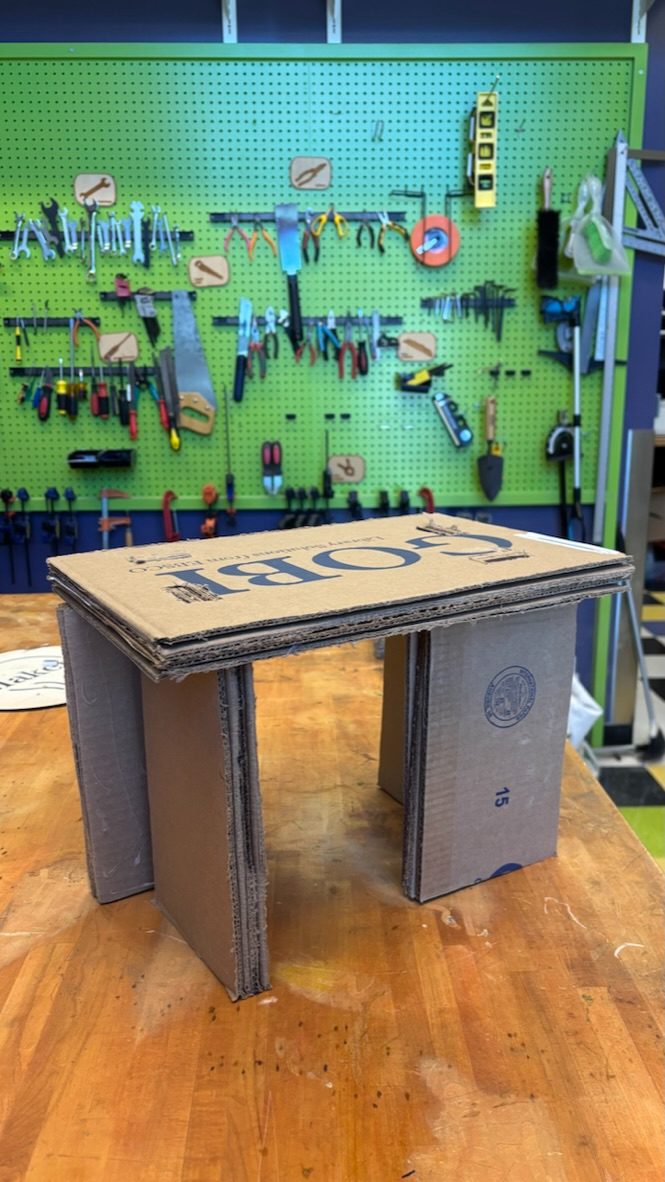
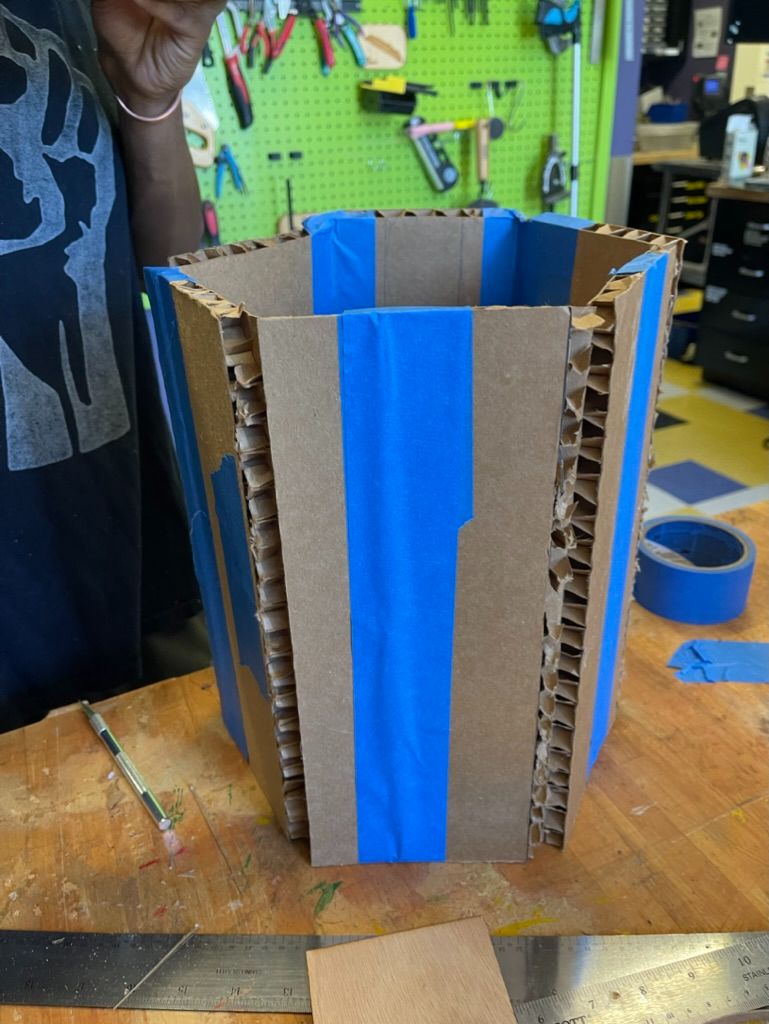
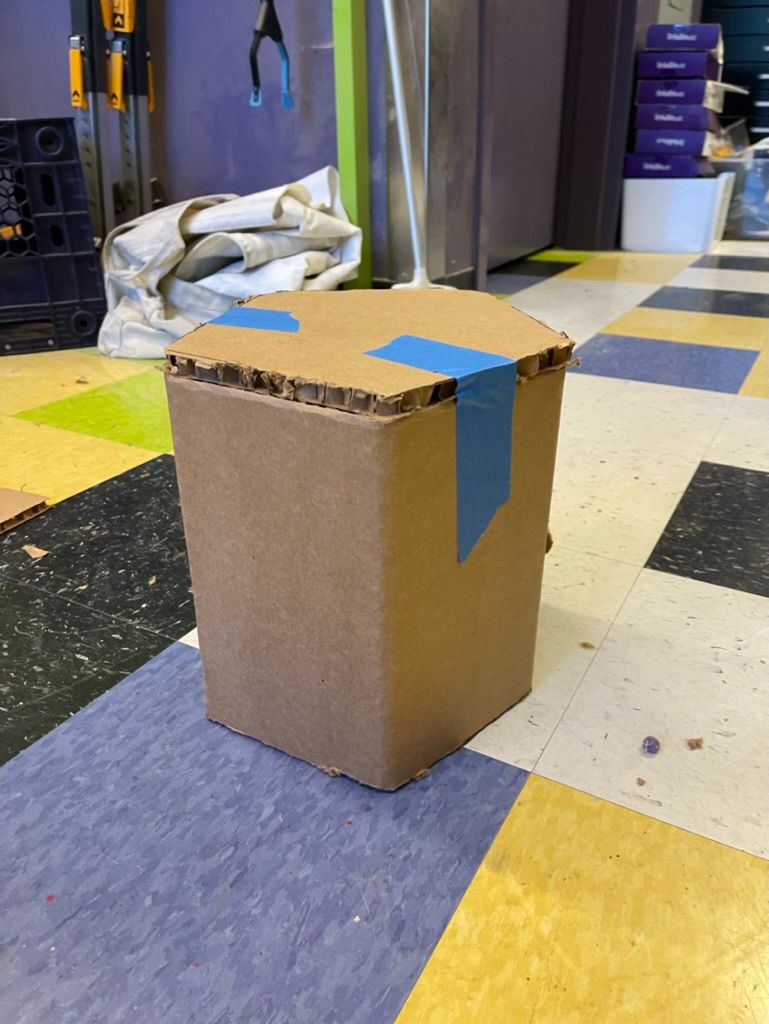
Lo-fi cardboard stool
Testing structure and load-bearing with layered cardboard. Proved the form and material choice worked.
03
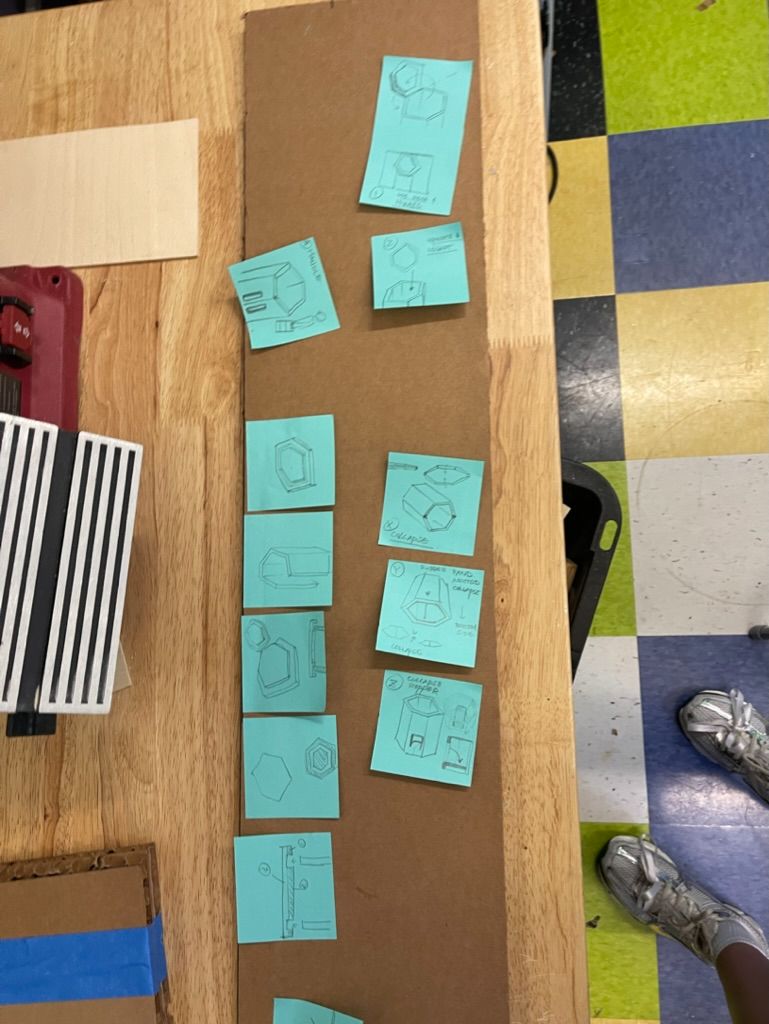
Paper & mini prototypes
Testing modularity and assembly logic at small scale before committing to full materials.
04
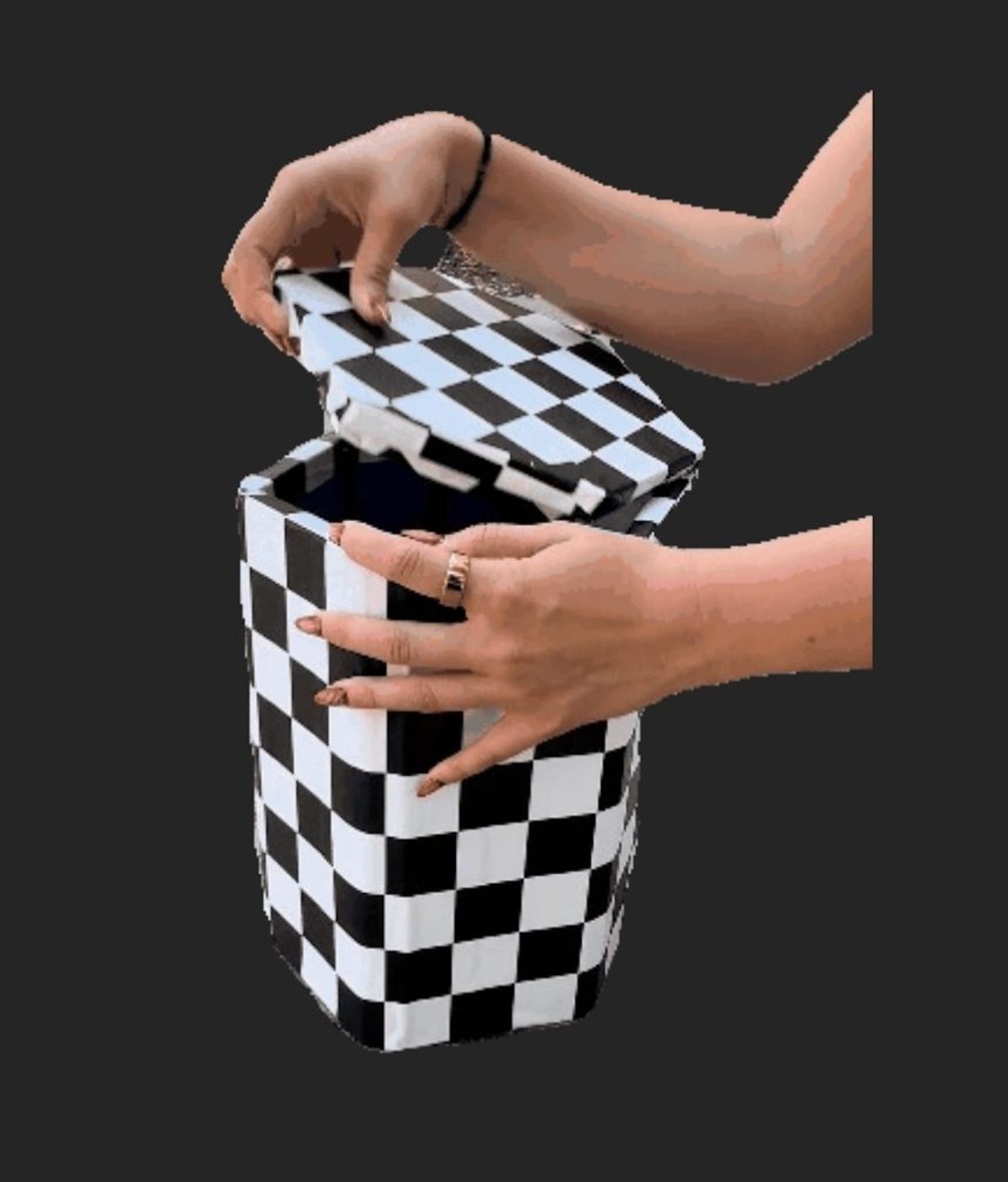
Final collapsible stool
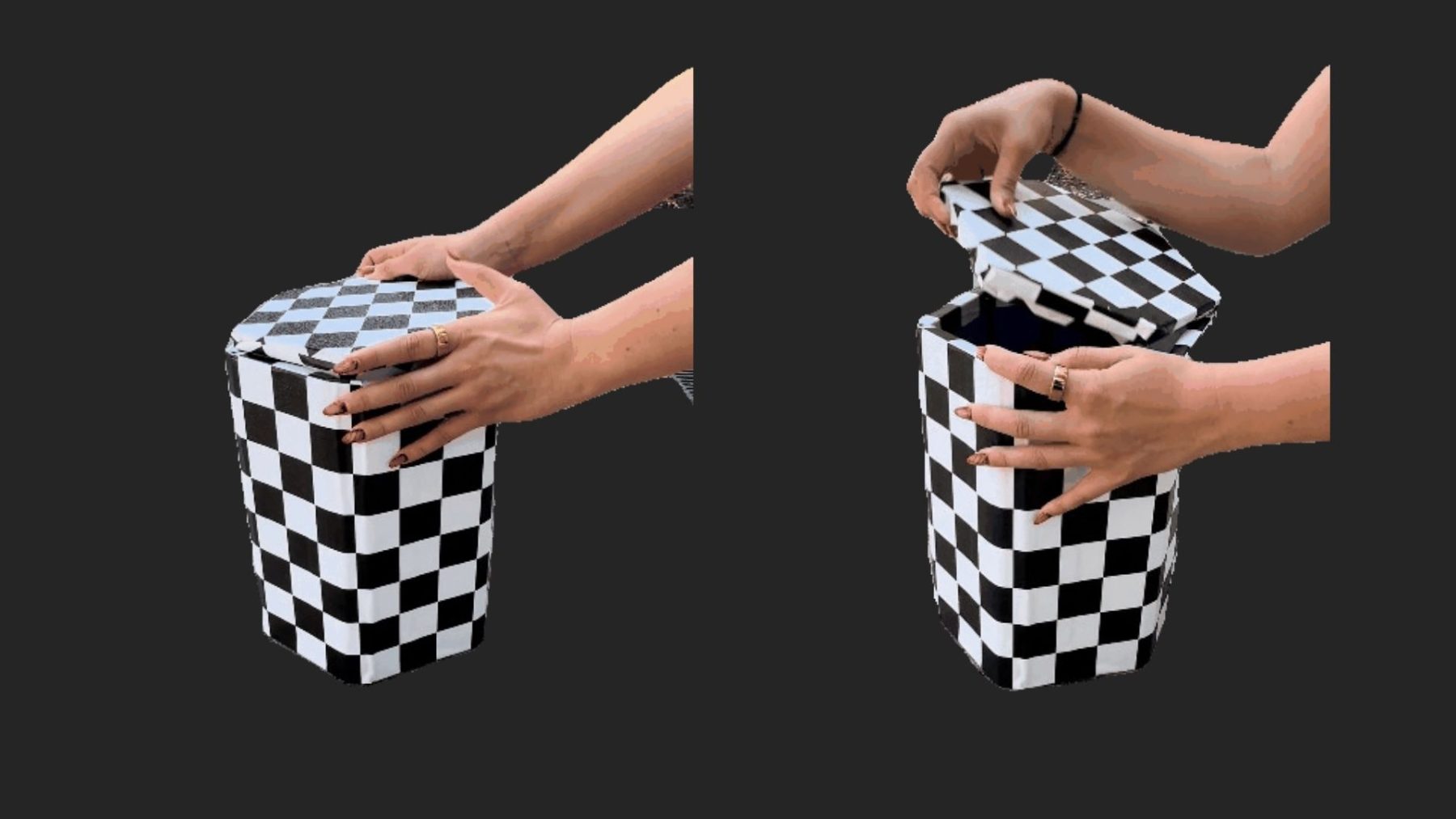
Assembled in under 30 seconds, fits flat, weighs almost nothing, looks like something you'd actually want to own.
From the workshop
scroll →
04
The Product
The product
Street Seat
Lightweight collapsible cardboard kit
Assembles in under 30 seconds, no tools required
Fits flat in a standard backpack
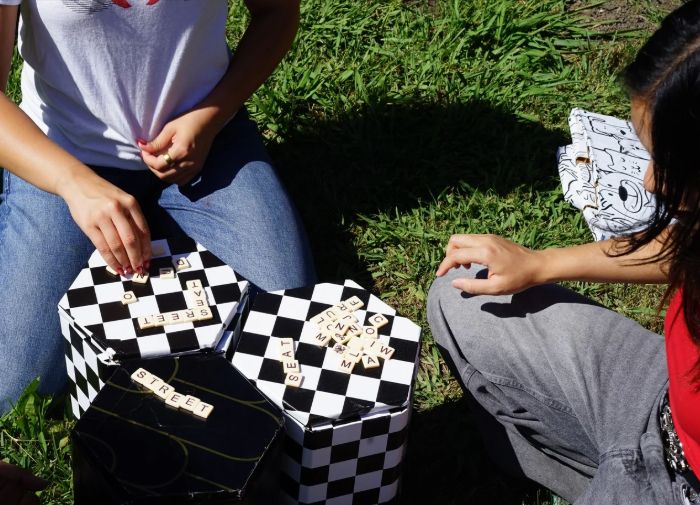
Customizable by whoever owns it
"In a world of over-designed spaces, a seat is simple. Adaptable. Activatable."
Why Street Seat
Street Seat uniquely combines high customization, strong community engagement, playful interaction, and street-readiness, without the barriers of heavy infrastructure or permanent installations. No permits. No tools. No installation. Just sit.
Product
Customization
Portability
Community
Street Seat
High
High
High
Soofa Smart Bench
Low
Low
Medium
WikiSeat DIY Stool
High
Medium
Medium
Parklets (SF/NYC)
Medium
Low
High
In the wild.
scroll →
05
Brand Identity
Brand identity
Street Seat is rebellious, fun, and inviting.
Keeping a consistent brand identity across every touchpoint, the product, the wrap pattern, expo materials, the Build Day, was essential. The visual system had to feel as claimable as the stool itself.
Primary typefaceOswald
Secondary typefaceUrbanist
Brand personalityRebellious · Fun · Inviting
Spring Green
#2a7d4e
Sage Green
#a8c5a0
Tangerine
#ff6b35
Cerulean
#2e86ab
Resene Nero
#252525
Seal Brown
#582F0E
Cornsilk
#F8F6F1
Reflection
What we learned.
Designing for and with a community is fundamentally different from designing for a user. Our most important research happened not in a classroom but outside Pizza My Heart in Redwood City, talking to Hugh, Phyllis, Honey, and Jason. They didn't tell us what to build, they told us why it mattered. The seat was always secondary to the act of showing up.
If we did this again, we would have gotten into the community earlier and stayed longer. We would have hosted a Build Day in East Palo Alto before the final expo, not just planned one for after. And we would have trusted the scrappiness of the milk crate prototype sooner, the most sophisticated version of Street Seat is not necessarily the most powerful one.
What this project taught us about design: the most radical interventions are often the simplest ones. A seat is not just a seat. It is a statement about who belongs.
Field management platform for small farming operations
Client
R.S. Garewal & Sons Inc. Imperial Valley, CA
My role
UX Designer Researcher
Status
Prototyping phase Figma system in progress
Platform
Mobile-first
Fields4 active
North MesaHarvesting
Cut 3 · 142 acres
JR
MC
River BottomBaling
Cut 2 · 88 acres
TS
South FlatReady to cut
Cut 4 · 210 acres
JR
LG
Dry Lake FieldGrowing
Cut 1 · 176 acres
MC
About the project
A field-management tool built alongside a working farmer.
Mobile UXField ResearchSystems Design
Fieldr is a mobile-first field-tracking app for small farming operations. It started as a personal project. My father runs R.S. Garewal & Sons in Imperial Valley, and the entire operation lives in his head. After months working the fields with him, I started designing a tool that could carry that institutional memory without replacing the judgment that makes the farm run.
"The app holds memory so the farmer can hold judgment."
Process
01, Discovery
Live the problem
Months of immersion on the farm, working alongside the main operator, and watching how decisions actually get made.
02, Synthesize
Map what's there
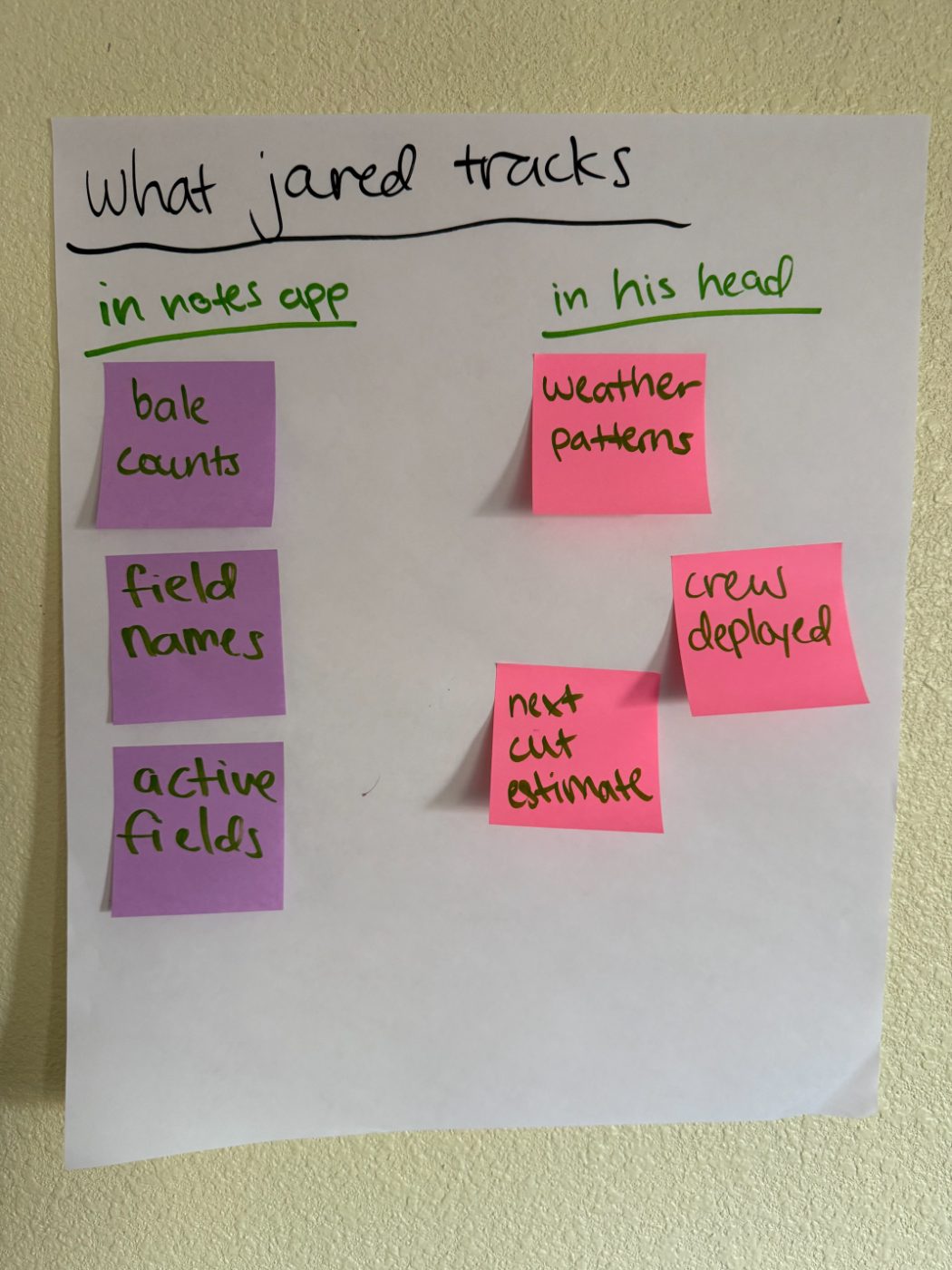
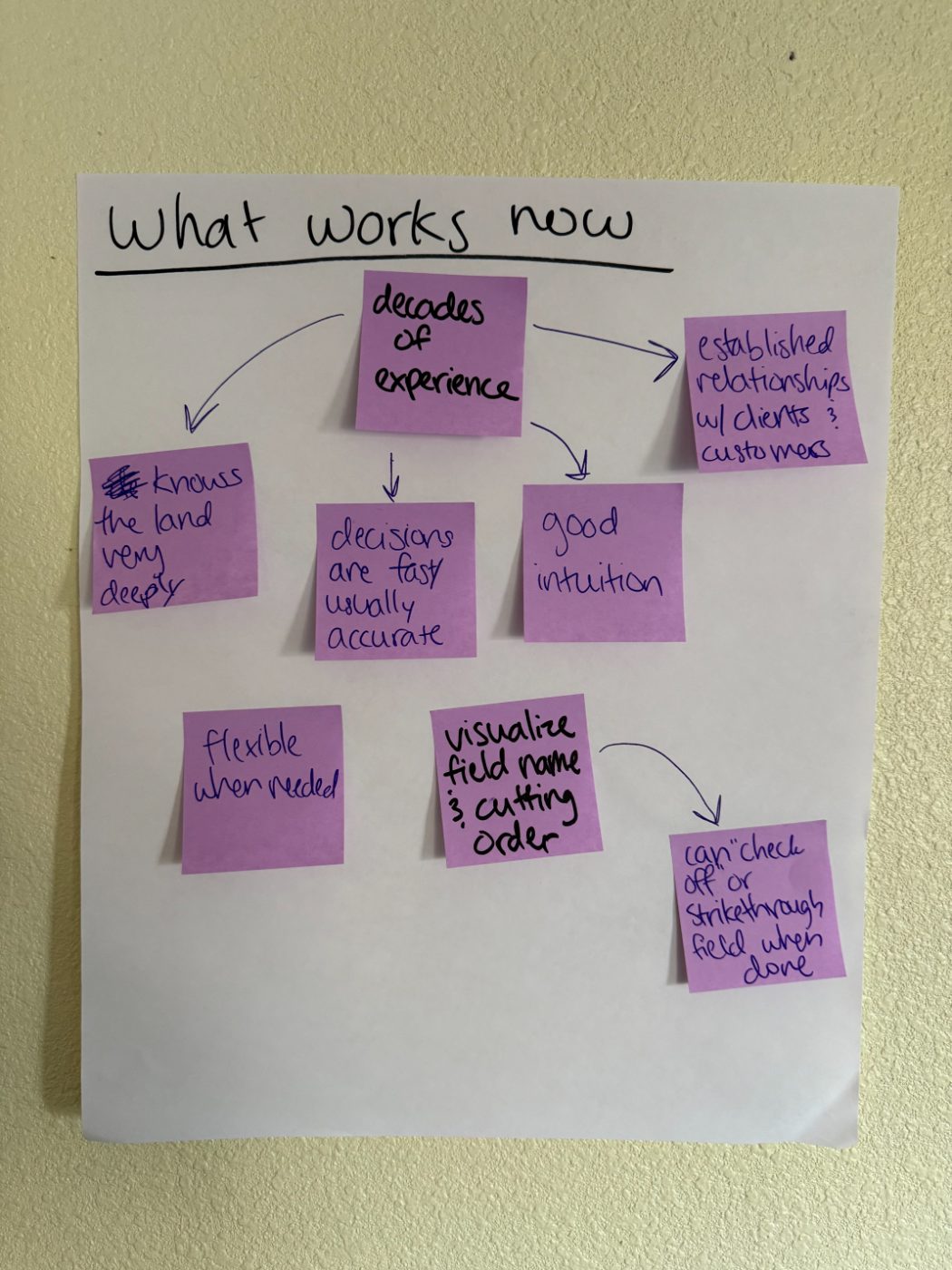
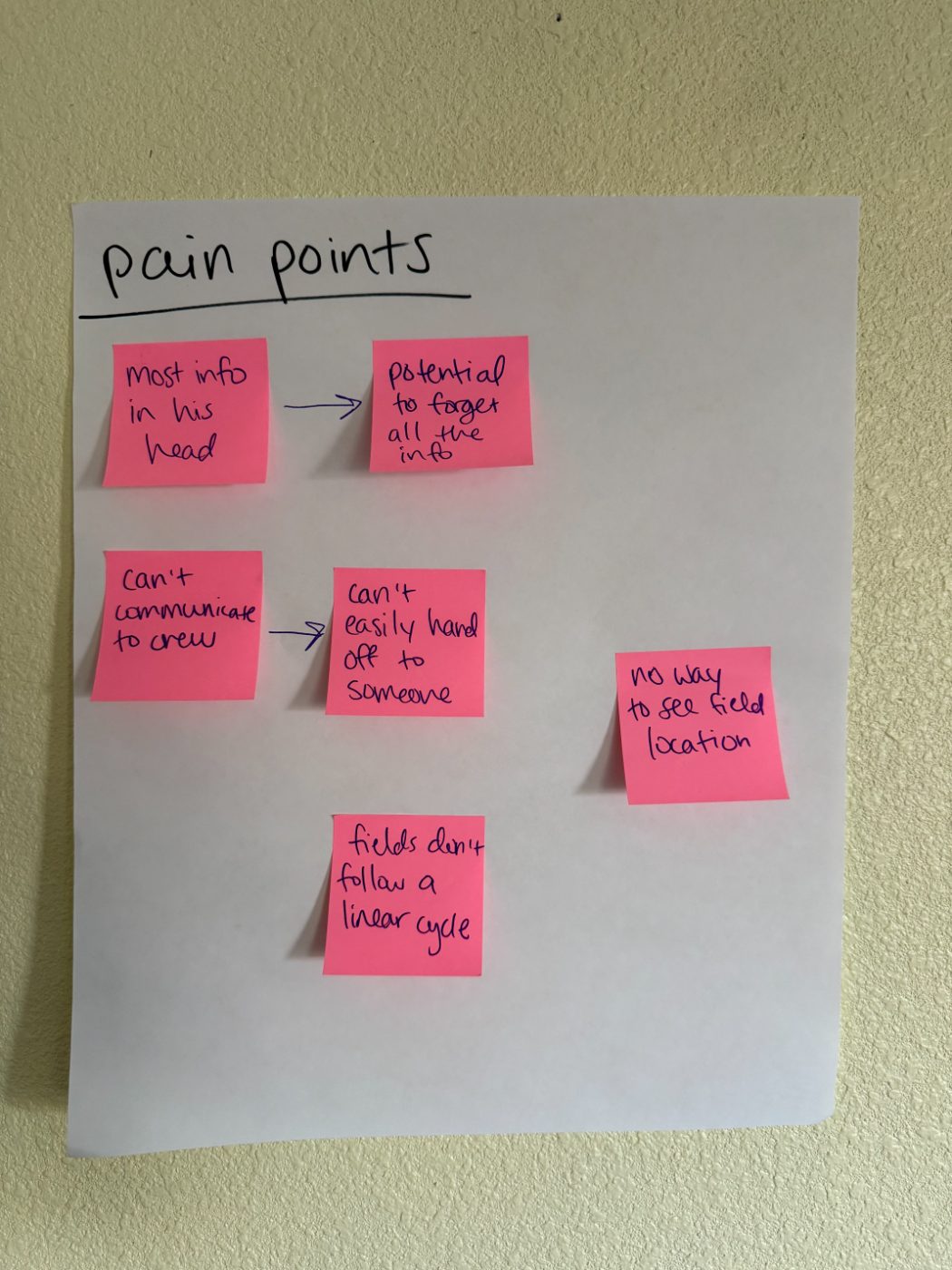
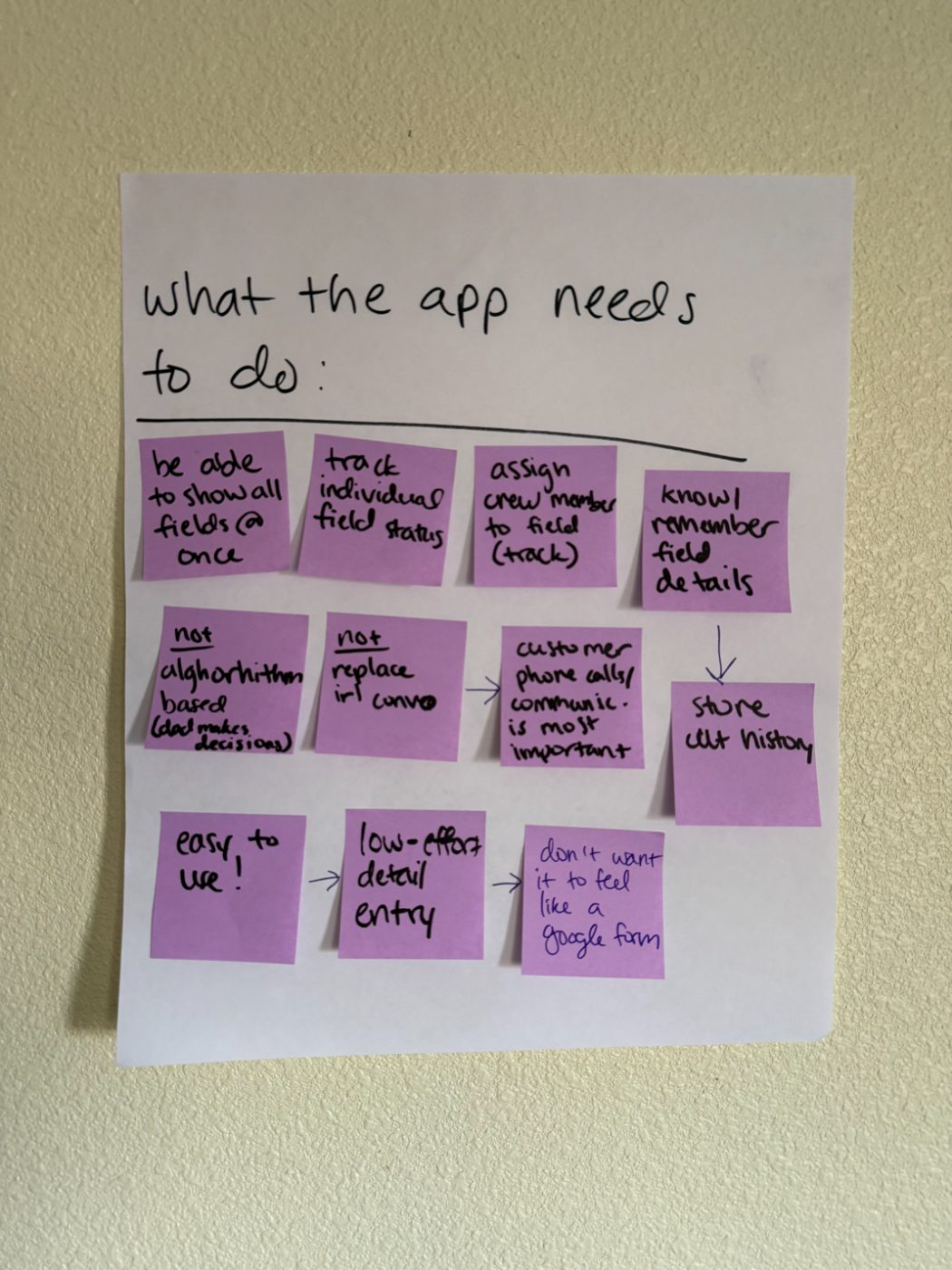
Four wall-sized research boards distilling pain points, daily tracking, what already works, and what an app would need to do.
03, Define
Set the rules
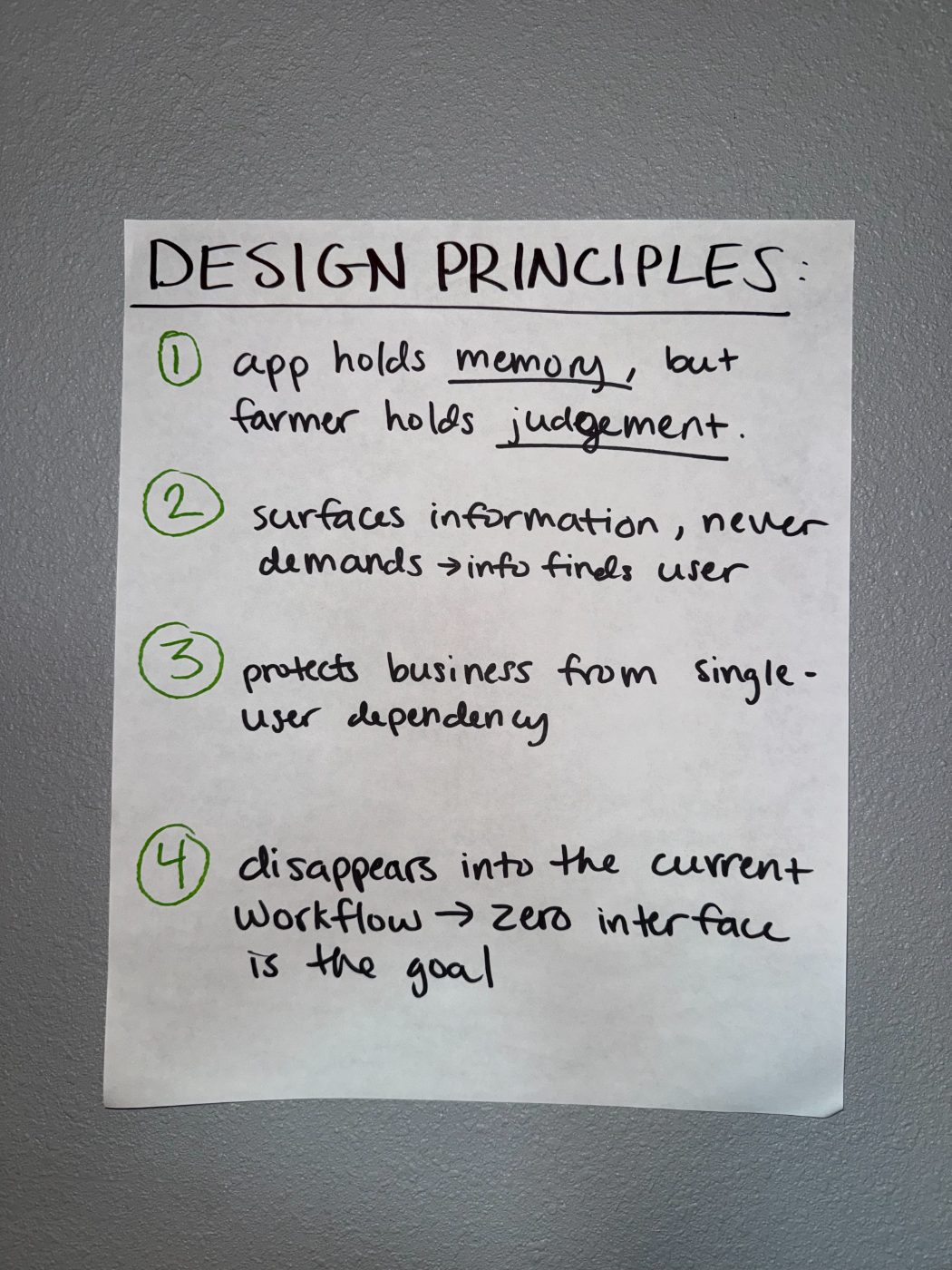
Four design principles created collaboratively to guard every decision: Memory, not judgment. Surface, don't demand. Protect the business. Disappear into the work.
04, Design
Build the system
Figma foundations first: color, type, primitives, then components. Currently converging into a working prototype.
05, Iterate
Test with farmers
In progress. Next step is putting screens in front of real operators and crew, and rebuilding from what they tell us.
Each phase below is covered in more depth in the sections that follow.
User research
Four boards on a wall, one farmer in the room.
Aside from time spent immersed on the the farm, user research consisted of extensive conversations with my user and collaborative brainstorming, all documented with a wall full of sticky notes. We mapped what Jared tracks, what already works, where it breaks down, and what an app would actually need to do. For this project, a scrappy and personal research accommodated to the needs of the user.
01
What Jared tracks
Jared's tracking system for his fields is split between his phone's notes app and his own memory. Memory is what carries the high-stakes, time-sensitive information. This isn't a problem, but something to be built into the solution.
02
What works now
The farm thrives on generations of experience, fast intuition, and deep relationships to the land. This could never be replaced by an app, so instead we need to build something that enhances it.
03
Pain points
Right now there is single-person dependency, no shared record, and no easy hand-off.
04
What the app needs to do
Show every field at a glance, track status, crew, and history. It needs to be easy enough to update mid-task, and it should never feel like a Google form.
Design principles
Pinned on the wall, day one of design
These four came directly out of the research. Every screen has to earn its way past them.
01
The app holds memory · The farmer holds judgment
Fieldr records, surfaces, and organizes, but the farmer always decides. Every design choice protects that division of labor.
02
It surfaces, never demands · Information finds the farmer
No stressful notifications. Fieldr only shows what's relevant when the farmer opens the app, ensuring that it works around the farmer's rhythm.
03
It protects the business · From single-person dependency
Institutional knowledge gets distributed across the team, so the operation can still run when the operator is unavailable.
04
It disappears into the work · Zero interface is the goal
In a busy and relentless industry like agriculture, the most effective tool is the one you stop noticing. Each interaction should be ten seconds or less.
Problem & solution
The problem
Farming runs on institutional memory that lives in one person's head.
Operations like RSG juggle dozens of fields, multiple crews, and overlapping harvest cycles entirely from memory. When that memory is unavailable, the operation stalls.
No single source of truth for field status
Crew coordination happens through informal calls and texts
Cut history lives in notebooks or not at all
One person's absence can stall the whole operation
The solution
A living record of every field. Always current. Always accessible.
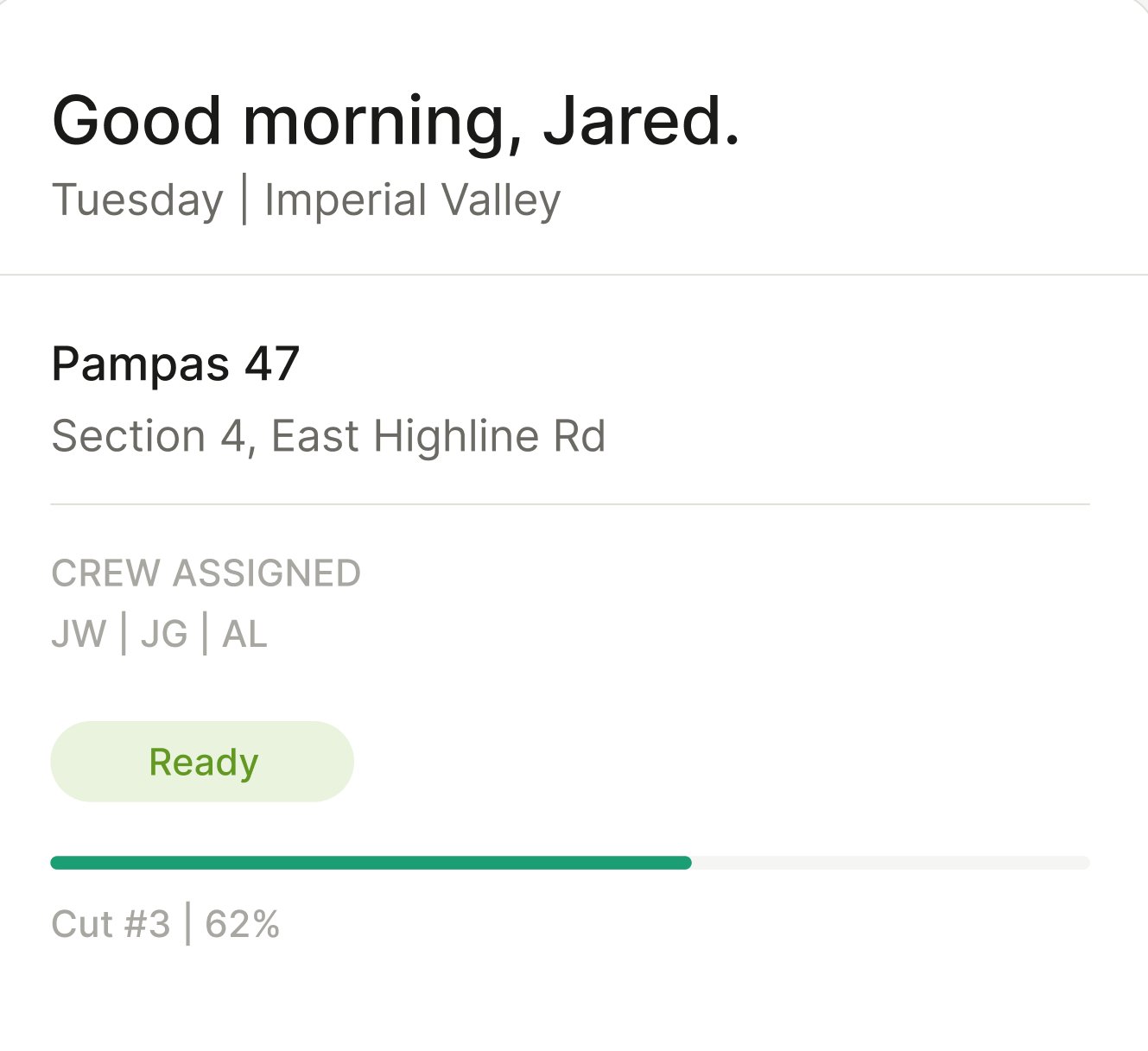
Fieldr surfaces the right information at the right time without demanding attention. Crew members update field status in seconds; the operator sees the whole farm at a glance; the business stops depending on any one person.
Real-time field status across the entire operation
Crew assignment and progress tracking
Cut history and yield records per field
Designed to be used in the field, not at a desk
How it works
Every field has a state. The app makes that state visible.
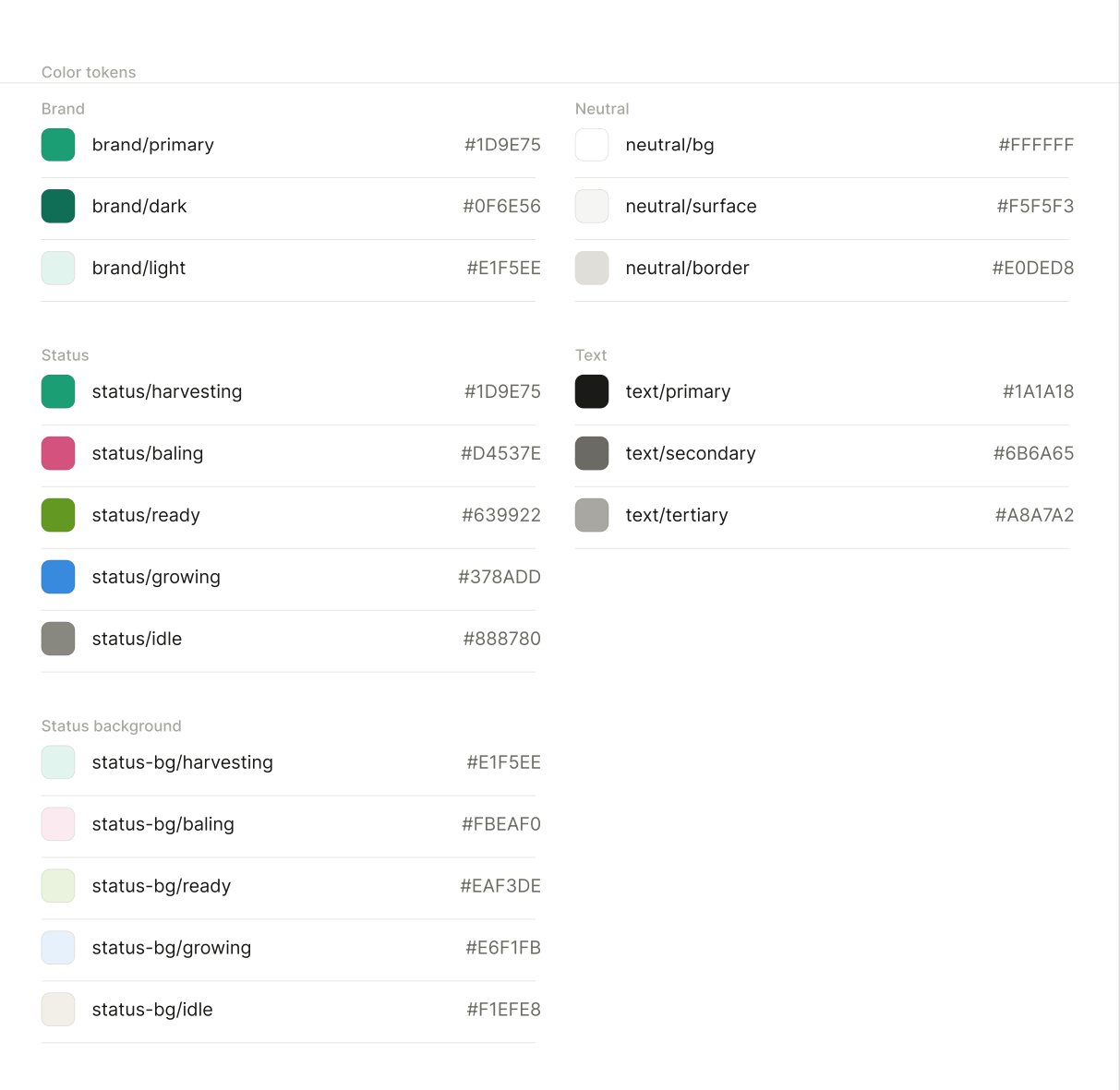
A finite, named set of field statuses was one of the first decisions. Every visual element in the app, from badge colors, progress bars, card ordering derives from them. The language is the farmer's, not a designer's invention.
Harvesting
Active harvest in progress. Crew on field. Highest priority.
Baling
Cut hay drying and being baled. Follow-on from harvesting.
Ready to cut
Field has reached maturity. Awaiting crew & equipment.
Growing
Active growth cycle underway. No crew action required.
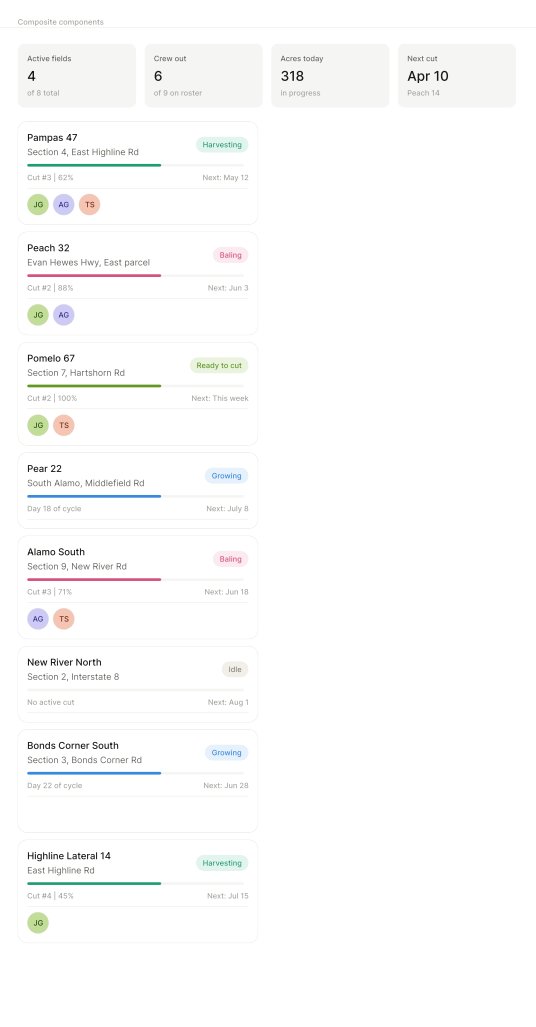
Fields list
The whole farm, one glance.
Every active field, sorted by status urgency. Status badge, crew assignment, current cut progress, and acres on a single card. No menus, no filters required to see what matters today.
Field detail
Full memory, per field.
Cut history, yield records, crew assignments past and present, location on the map, and notes. Everything an operator currently keeps in their head, written down once and stored forever.
Crew assignment
Who's where, when.
Assign a crew to a field, see who's deployed across the farm, hand off mid-cycle without re-explaining anything. The handoff cost drops to near zero.
Status updates
Two-tap progress.
Crew on the field bumps status in seconds. It requires no forms and the operator sees the change immediately.
Branding
Simple, legible, and accessible.
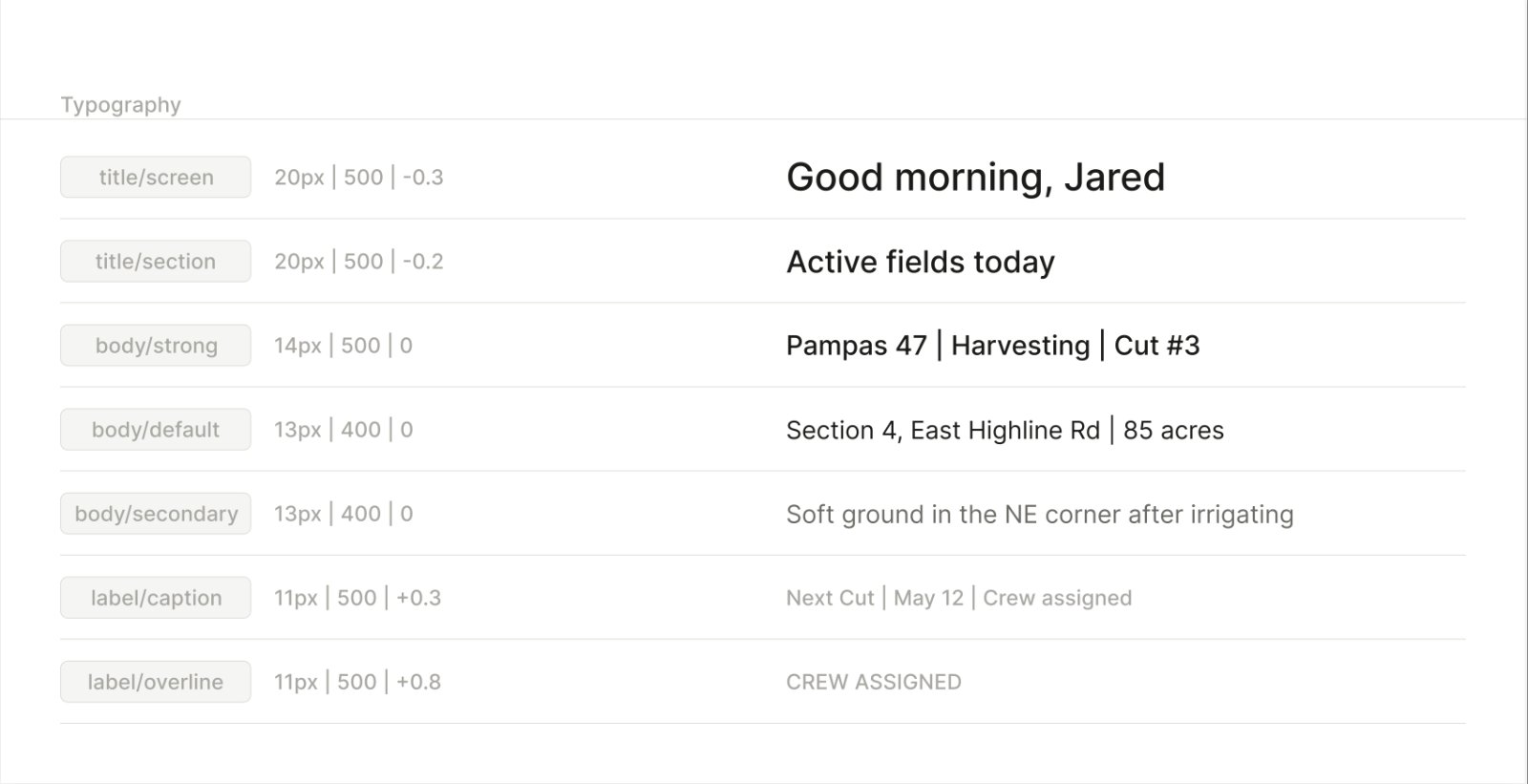
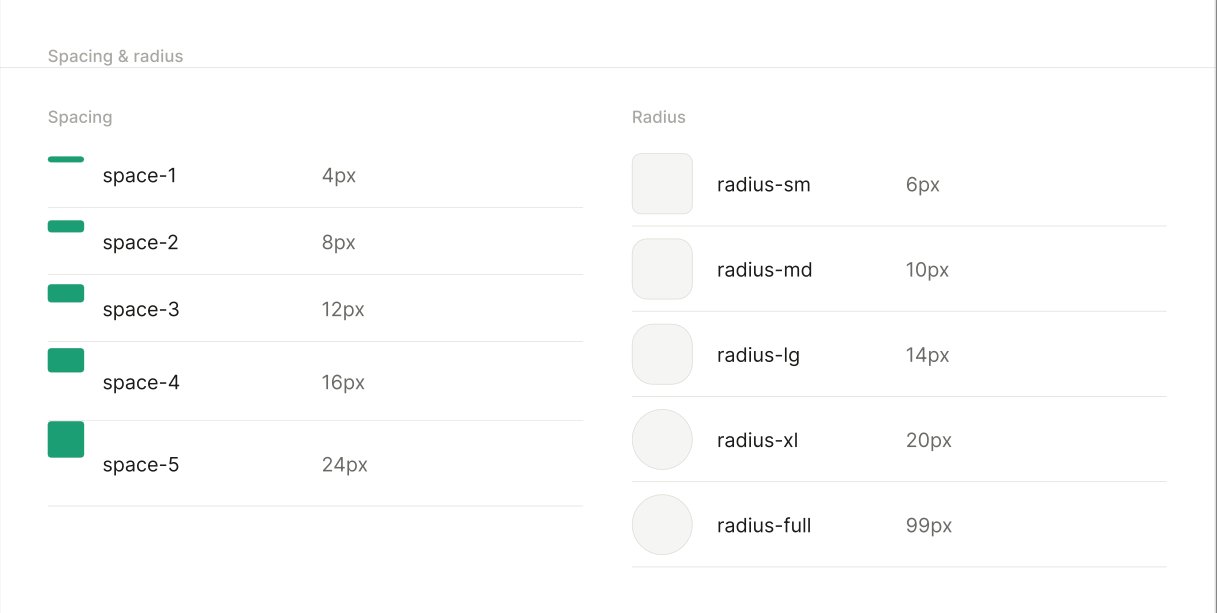
Branding lives in the Figma file: color tokens, typography scale, primitives, and the component library that drives every screen.
In progress
Currently converging → foundations and components, on the way to a working prototype.
The work so far is the system underneath the screens: primitives, base components, and composite components. Next, these converge into a real, clickable Figma prototype. After that, screens go in front of farmers, and the cycle diverges again: iterate, rebuild, create something that fits the work.
Foundations + components → working Figma prototype.
In progress
04
Test with farmers
Put screens in front of real operators and crew.
05
Diverge, again
Iterate, rebuild, keep working with farmers until it fits.
Reflection
Designing such a personal project offers unmatched insight.
Most design work starts at a distance. You read interview transcripts, study journey maps, and try to imagine your way into a stranger's day. With Fieldr, I started from the inside. I spent months on the farm with my father, working the cuts, watching the decisions get made in real time, and learning the seasonal logic of a hay operation by living it. The research was the work, and the work was the research.
That proximity is both an advantage and a risk. The advantage is that I understand the context in a way no amount of interviews could replicate. The risk is making assumptions about the version of the problem you think you understand rather than the one that actually exists. I had to stay curious and keep asking questions even when I thought I already knew the answer, and I'll continue to as I iterate on this project.
The most important design decision in this project was not a UI choice, but rather choosing to build a tool that acts as a working memory and organizational reference rather than a decision-making tool. That distinction came straight from my father in one of our earliest conversations, and helped me understand the true need for farmer intuition in this industry.
What I am taking forward into every project after this one is the value of going deep before going wide. Sitting with a problem until I can understand its nuance. Designing alongside the people who live it instead of for them. The fastest path to a tool that fits the work is to do the work first.